How Much Concrete Do I Need for My Project?
Running short on concrete halfway through a pour can mean costly delays, while ordering too much wastes money and materials. If you're wondering, "How much concrete do I need?" the answer depends on your project's dimensions, thickness, and the type of concrete you're using.
Accurate measurements are the starting point for calculating concrete quantities for patios, sidewalks, foundations, and slabs. A few simple calculations can help you plan your order, account for waste, and keep the job moving without unnecessary surprises.
How Thick Should Concrete Be for Your Project?
Concrete thickness depends on the project's purpose, expected weight, and ground conditions. Choosing the right depth helps prevent cracking and premature wear.
For most residential sidewalks and patios, 4 inches is a common starting point. Driveways and garage floors typically range from 4 to 6 inches, depending on vehicle weight and usage. Heavy equipment pads may need 6 to 8 inches or more, based on loading and engineering specifications.
These measurements are general recommendations. Heavier loads, unstable soil, and local building codes may call for thicker concrete or additional reinforcement. Around Chicago, proper base preparation and drainage also matter, especially with seasonal freezing and thawing. Always check project specifications before settling on a thickness.
How to Calculate How Many Yards of Concrete You Need
Concrete is measured in cubic yards, with one cubic yard equal to 27 cubic feet. To calculate how much your project needs, start with three measurements:
- Measure the length and width of the area in feet.
- Determine the thickness of the concrete in inches.
- Calculate cubic yards using this formula
Length (ft) × Width (ft) × Thickness (in) ÷ 324 = Cubic Yards
For example, a 10-by-10-foot patio that's 4 inches thick needs:
10 × 10 × 4 ÷ 324 = 1.23 cubic yards
A concrete calculator can speed up the process, especially for larger projects. Measure each section separately if the dimensions or thickness vary.
How Much Concrete Do You Need for Common Projects?
Concrete quantities vary based on surface area and thickness. The table below shows estimated cubic yards for common residential and small commercial projects.
| Project Size | Thickness | Cubic Yards |
|---|---|---|
| 4 x 4 ft | 4 inches | 0.20 |
| 5 x 5 ft | 4 inches | 0.31 |
| 8 x 8 ft | 4 inches | 0.79 |
| 10 x 10 ft | 4 inches | 1.23 |
| 10 x 12 ft | 4 inches | 1.48 |
| 10 x 20 ft | 4 inches | 2.47 |
Quantities are rounded estimates and exclude additional concrete for waste, uneven ground, or variations in slab thickness.
For irregularly shaped areas, divide the project into smaller rectangles, calculate each section separately, and add the totals. Use these figures as a starting point before placing your concrete order.
How Many Bags of Concrete Do I Need?
Bagged concrete works well for smaller pours, repairs, and areas with limited truck access. The number of bags depends on the total cubic feet needed and how much concrete each bag produces.
A standard 40-pound bag yields approximately 0.30 cubic feet, while a 60-pound bag yields 0.45 cubic feet and an 80-pound bag yields 0.60 cubic feet.
For example, a 4-by-4-foot slab at 4 inches thick needs approximately 18 standard 40-pound bags, 12 standard 60-pound bags, or 9 standard 80-pound bags.
To calculate your total, divide the project's cubic feet by the yield per bag and round up. Check the manufacturer's stated yield before purchasing, since concrete mixes can vary.
How Much Extra Concrete Should You Order?
Ordering a little extra concrete helps account for uneven ground, minor measurement errors, and material lost during mixing or placement. For most projects, adding 5–10% to your calculated volume is a reasonable starting point.
For example, if a patio needs 2 cubic yards, a 10% allowance brings the total to 2.2 cubic yards. Projects with irregular shapes, inconsistent depths, or rough subgrades may need a larger buffer.
An uneven gravel base or excavation with low spots can increase the actual volume, so check the finished depth at several points before ordering. Accurate measurements and a realistic waste allowance help avoid unnecessary costs and interruptions during the pour.
Bagged Concrete vs. Ready-Mix: Which Is Best?
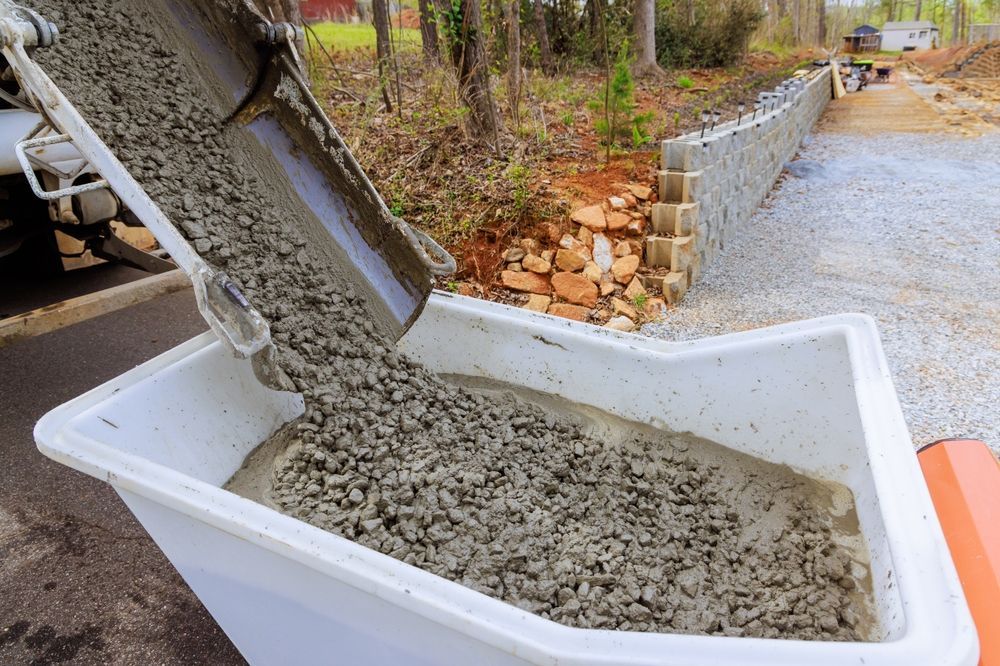
Choosing between bagged concrete and ready-mix depends on project size, labor, budget, and jobsite access. Both have advantages depending on the work involved.
| Factor | Bagged Concrete | Ready-Mix |
|---|---|---|
| Best for | Small pours and repairs | Larger slabs and driveways |
| Labor | Manual mixing needed | Arrives pre-mixed |
| Cost | Practical for small quantities | Often economical for larger volumes |
| Site access | Works in tight spaces | Needs truck or pump access |
| Timing | Mixed in batches | Requires coordinated placement |
Ready-mix suppliers may charge short-load fees for smaller deliveries, and minimum order quantities vary. Confirm these charges before comparing costs.
For mid-sized projects,
concrete equipment rentals can reduce mixing labor without scheduling a concrete truck. Consider the total material cost, available crew, and placement time before deciding which option fits your project.
What Tools and Supplies Do You Need to Pour Concrete?
Having the right equipment ready before pouring helps prevent delays and keeps the work moving smoothly. The specific materials depend on the project's size, thickness, and reinforcement needs.
Common concrete tools and materials include:
- Concrete mixers: Blend bagged concrete consistently for smaller pours.
- Screeds and floats: Level and smooth freshly placed concrete.
- Trowels and edgers: Create clean edges and finished surfaces.
- Rebar and reinforcement: Strengthen slabs and footings where specified.
- Forms and stakes: Hold concrete in place during pouring.
- Curing materials: Protect fresh concrete as it gains strength.
- Safety gear: Wear waterproof gloves, rubber boots, and eye protection when handling wet concrete, plus appropriate respiratory protection when mixing dry materials.
For projects needing custom reinforcement,
concrete rebar fabrication can help crews prepare accurately sized materials before arriving on-site.
Get Concrete Tools and Supplies at Bracing Systems
A successful concrete project starts with accurate measurements, quality materials, and the right equipment for the job. Bracing Systems Inc. helps contractors and DIY builders find the concrete tools, reinforcement, and construction supplies needed to keep projects on track.
From concrete finishing equipment and rebar fabrication to mixer rentals, our team helps you prepare for every stage of the pour. With competitive pricing, extensive inventory, and friendly service, we're here to help you get the job done.
Serving Northern Illinois, Wisconsin, and Northern Indiana from Hanover Park, IL, we're ready to help with your next project.
Contact Bracing Systems Inc. today to discuss concrete finishing tools, reinforcement, mixer rentals, and the materials needed for your next pour.

We understand your challenge: To get all your equipment and supplies reliably and on time, while maintaining good profit margins.